

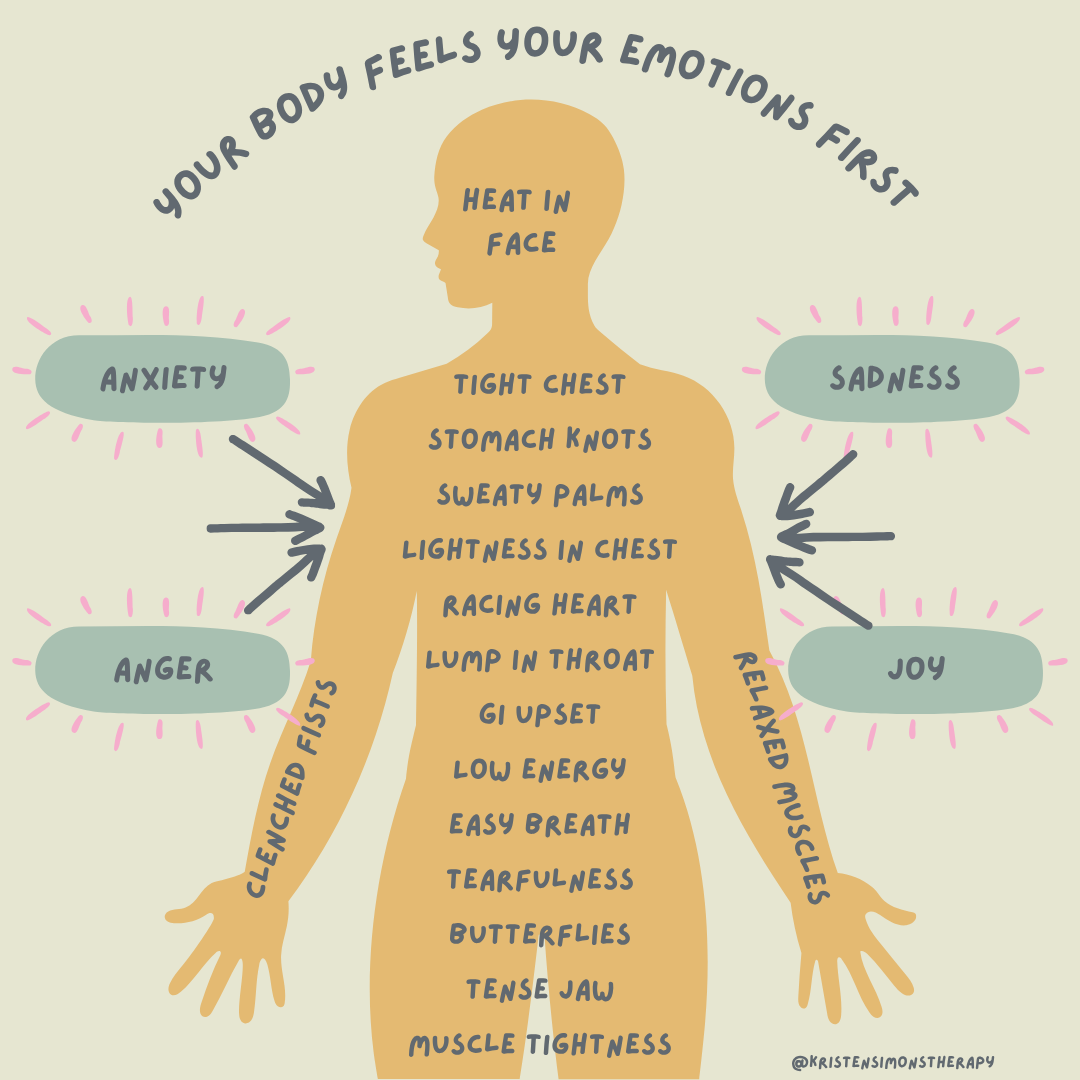

Where Emotions Live in the Body: Understanding the Mind–Body Connection
December 11, 2025
If you’ve ever had a therapist (possibly me!) ask you to notice where your emotions live in your body, you’re not alone. And if you’re a woman—especially a mother—the body often speaks even louder.
Why?
Because while women navigate the same emotions as everyone else, they’re also managing invisible labor, caregiving demands, hormonal shifts, identity changes, and a cultural pressure to “hold it all together.”
Your mind might say, I’m fine.
But your body often knows the truth first.
Today we’re exploring how women’s emotions show up physically—and how understanding these cues can support anxiety relief, emotional regulation, and healing.
Your Body Feels Your Emotions Before Your Mind Names Them
We often think of emotions as thoughts, but emotions begin as sensations.
And for women, this often shows up as:
- the tight chest before you say “yes” when you want to say “no”
- the jaw tension after carrying the mental load all day
- the drop in your stomach when you’re overstimulated from multitasking
- the heaviness in your shoulders when you feel you have to be “the strong one”
These sensations aren’t random—they’re your nervous system sending signals long before your mind consciously recognizes stress, resentment, fear, or overwhelm.
Why This Matters So Much for Women & Mothers
Women and mothers often move through life at a speed their nervous system was never designed for.
Between caregiving, careers, emotional labor, and endless expectations, the body stays “on” far too long.
In the women I work with, physical cues often show up as:
- irritability that seems out of nowhere
- chronic fatigue
- muscle tension that never fully releases
- overstimulation (especially from noise, touch, or clutter)
- difficulty relaxing even when things are quiet
- a sense of being emotionally full but unable to pinpoint why
And for mothers—especially postpartum women—hormonal shifts, interrupted sleep, and identity transitions create an even more sensitive stress response.
When the nervous system is flooded, emotions show up physically first. That’s why we say our emotions live in our bodies.
Why Emotions (and Trauma) Live in our Bodies
Many women learn early on to be polite, agreeable, productive, self-reliant, and calm—even when something feels wrong. Over time, this teaches the body to store what the mind doesn’t have space or permission to express.

This can look like:
- bracing muscles
- feeling “frozen” or shut down
- chronic tension that doesn’t match the moment
- restlessness or buzzing under the skin
- sudden waves of heat, panic, or pressure
Your body is not overreacting—it’s remembering.
And because trauma and chronic stress imprint themselves physically, somatic work becomes a powerful pathway to healing.
How Women Can Start Building Somatic Awareness (In 20 Seconds or Less)
You don’t need a formal meditation practice. Start with something that fits into real life—between meetings, while feeding a baby, or in the car before walking into work.
Try this:
- Pause. Even for three seconds.
- Place a hand somewhere grounding: your chest, stomach, or shoulders.
- Ask:
- How is my breath?
- What feels tight, heavy, or activated?
- What emotion might be connected to this sensation?
You’re not judging or fixing—just noticing. This is how women begin shifting from “powering through” to “checking in.”
A Gentle Reminder for Women Who Carry a Lot
Your body is not inconveniencing you.
It’s advocating for you.
Whether you’re navigating postpartum emotions, managing high-functioning anxiety, or juggling the mental load of work and family life, remember:
Your body is sending signals not because you’re failing—but because you’re feeling.
Learning the language of those sensations gives you:
- more emotional bandwidth
- earlier warning signs
- deeper self-trust
- stronger boundaries
- a calmer nervous system
Your emotions are wise.
Your body is wise.
And women’s healing deepens when the two finally get to speak the same language.
If you’d like to explore this topic further, reach out and schedule a free consultation call with one of our experienced clinicians.
Kristen Simons is the founder of Embodied Healing Counseling & Yoga, an integrative therapy and yoga therapy practice in Evanston, Illinois. She specializes in anxiety, perinatal mental health, and somatic mind-body work, helping women and adults build grounded, sustainable tools for everyday life.
Explore services and resources at embodiedhealingtherapist.com.
Leave a Reply
Cultivating healing and hope through mind, body, and spirit. Cultivating healing and hope through mind, body, and spirit. Cultivating healing and hope through mind, body, and spirit. Cultivating healing and hope through mind, body, and spirit. Cultivating healing and hope through mind, body, and spirit. Cultivating healing and hope through mind, body, and spirit. Cultivating healing and hope through mind, body, and spirit. Cultivating healing and hope through mind, body, and spirit. Cultivating healing and hope through mind, body, and spirit. Cultivating healing and hope through mind, body, and spirit.
browse by category
Explore practical insights, education, and strategies for understanding and easing high-functioning anxiety and daily stressors.
Find supportive guidance, research-informed information, and real-life reflections on pregnancy, postpartum, and the emotional shifts of becoming a parent.
Discover yoga-inspired, somatic, and nervous-system–friendly practices and education to help you connect with your body and support overall well-being.
Relatable stories, gentle guidance, and helpful tools for navigating family dynamics, boundaries, and the realities of modern parenting.


Ways to work together
Learn to understand your patterns, manage overwhelm, and reconnect with what matters.
Support through fertility, pregnancy, postpartum, and the identity shifts of motherhood.
Helping you cultivate a more compassionate, balanced relationship with food, your body, and yourself.
Mind–body sessions that support emotional balance and nervous system regulation.
Get started
Yoga Services
Therapy Services


